- Do I need a building consent for a granny flat in NZ?
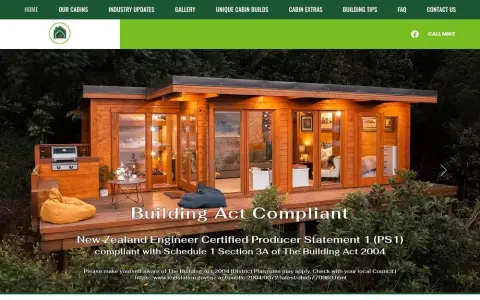
- Not since 15 January 2026, if it is a new detached single-storey building of 70 m² or less, at least 2 m from boundaries and other buildings, on a site that already has a home, built or supervised by licensed people, and clear of natural hazards. You still need a project information memorandum (PIM) from council before you start, and you must notify council within 20 working days of finishing.
- What is the maximum size of a consent-free granny flat?
- 70 m² of floor area, single storey. That is why so many builders now sell 69 to 70 m² two-bedroom plans. Anything bigger goes through a normal building consent.
- How much does a 2-bedroom granny flat cost in NZ?
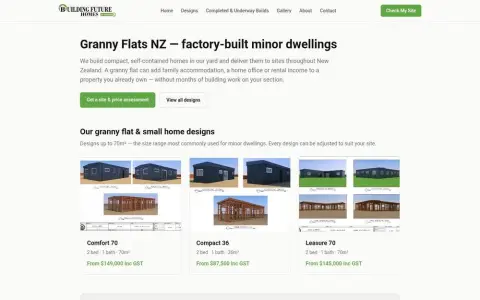
- Published 60 to 70 m² two-bedroom units sit roughly between $145k and $299k for the unit alone. Delivery, foundations, services, council fees and development contributions typically add another $40k to $100k. The calculator on this page breaks that down for your site.
- How long does it take to build a granny flat?
- Factory-built and transportable units are usually 8 to 16 weeks in the yard once plans are signed off, plus 2 to 6 weeks of site work. A site-built granny flat is more like 4 to 6 months. Add 4 to 8 weeks if you need a building consent.
- Can I rent out my granny flat?
- Usually yes, as a minor residential unit, but the tenancy must meet the Healthy Homes standards and your district plan may limit the size or require it to share the driveway and services with the main house. Tell your insurer and your bank.
- Can I put a tiny house on wheels in my backyard?
- A genuinely mobile tiny home on a road-legal trailer is usually treated as a vehicle, not a building. Councils look at whether it is effectively permanent: once it is plumbed in, skirted and has not moved for months, it can be treated as a building and need consent.
- Do I also need a resource consent?
- It depends on your district plan. The national standard for minor residential units permits one granny flat on most residential and rural sites if it meets the standard's conditions, but rules on site coverage, setbacks and earthworks still apply. Ask your council for a pre-application check.
- What is included in an advertised 'from' price?
- Usually just the unit, built and ready in the builder's yard, often in the base spec. Transport, crane, foundations, connections to power, water and drains, council fees, decks and steps are normally extra. Check whether the price includes GST: on this page we show the basis each builder states.
- Kitset or transportable: which is cheaper?
- A kitset is cheaper to buy, but you or your builder still put it together on site, and restricted work must be supervised by an LBP. Once labour is added, the gap to a transportable unit is often smaller than the sticker prices suggest. Transportables trade a higher unit price for a faster, more predictable build.
- Will a granny flat add value to my property?
- A permitted, self-contained minor unit generally adds value and rental income. A flat that skipped the PIM or the completion notice can do the opposite when you sell, because the buyer's lawyer will find it on the LIM. Keep every Record of Work and certificate.